

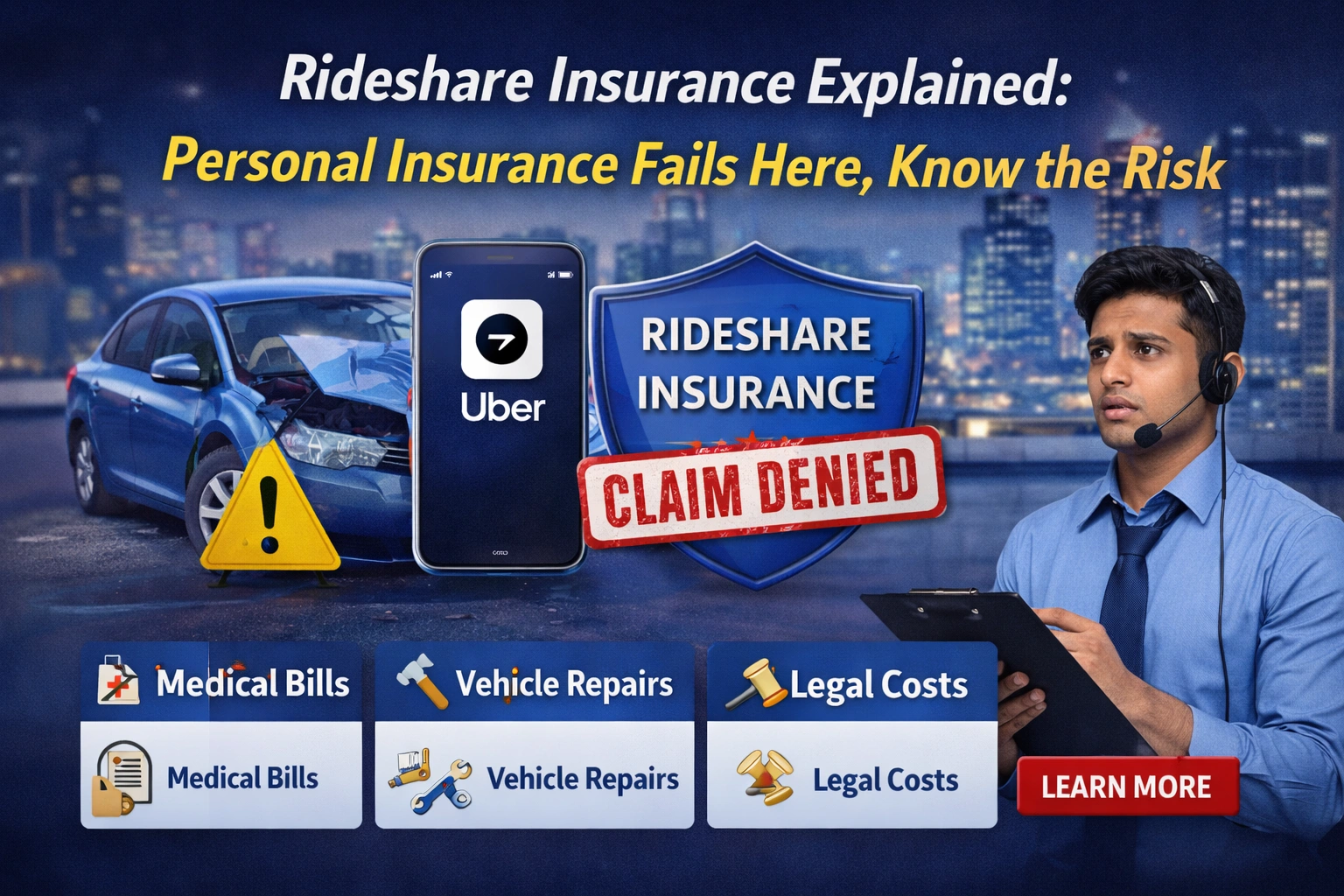
Often, when people get car insurance, they simply think, “Now my car is safe.”
But when it comes to rideshare driving—like driving for Uber or Lyft—this very thought becomes the biggest risk.
The truth is, personal car insurance and rideshare insurance are not the same.
Not understanding the difference between the two can lead to significant financial losses and legal troubles.
We’ve seen many drivers who found out after an accident that their policy wasn’t covering them at the time. The reason? They didn’t know that personal insurance doesn’t cover rideshare driving.
What is personal car insurance actually for?
Personal car insurance is designed for the everyday needs of ordinary people.
Such as:
- Commuting to work
- Dropping children off at school
- Going to the market or visiting relatives
- Going on vacation
This type of driving is considered “personal use.”
This insurance typically includes:
- Third-party liability coverage
- Coverage for damage to your own vehicle
- Medical expenses in case of injury in an accident
- Protection against uninsured drivers
This all sounds quite comprehensive, but there’s a major catch.
As soon as you start earning money with your car, personal insurance steps back.
If you’re waiting for a ride with the app on or transporting a passenger, your personal policy might say, “This is not our responsibility.”
Rideshare insurance is specifically for people who use their personal vehicles for rideshare work.
It fills the gap between personal insurance and the rideshare company’s insurance.
Phase One
When the app is on but no ride has been accepted yet.
Phase Two
When a ride has been accepted and you are on your way to pick up the passenger.
Phase Three
When the passenger is in your vehicle.
Most rideshare companies provide some coverage during phases two and three, but phase one is the most dangerous.
This is where most accidents happen, and where most claims are rejected.
Rideshare insurance acts as your shield during this crucial first phase.
What’s the real difference between the two types of insurance?
Simply put:
- Personal insurance doesn’t cover income-generating work.
- Rideshare insurance is specifically designed for that work.
- Rideshare insurance has higher liability limits.
- It provides better protection if a passenger is injured.
- It helps with medical expenses and legal matters.
Yes, rideshare insurance might be a little more expensive, but one accident without coverage could wipe out years of your earnings.
If you drive for a rideshare company without proper coverage and have an accident:
- Medical bills will come out of your pocket.
- You’ll have to pay for all vehicle repairs yourself.
- The passenger can sue you.
- The insurance company can deny your claim.
- Your income could stop if you can’t work.
In short, one mistake can ruin your entire financial situation.
Is there any additional protection available?
Yes, some rideshare insurance policies offer:
- Income loss coverage for injuries
- Assistance during extended treatment
- Temporary disability coverage
These features are crucial for those who rely on rideshare driving for their livelihood.
What should you do before getting the right insurance?
- Carefully read your current policy.
- Look for the term “Rideshare exclusion.”
- Talk openly with your insurance agent.
- Clearly state that you use your vehicle for income.
- Understand your state’s regulations.
Hiding information will only hurt you, not help you.
How can The Dressie Law Firm help you?
The Dressie Law Firm is experienced in rideshare accident cases. They have handled many cases where:
The insurance company rejected the claim
Confusion was created regarding the policy
Inadequate compensation was provided for the damages
This firm:
Reviews your policy line by line
Identifies the correct responsible party
Communicates with insurance companies on your behalf
Stands firm in court if necessary
In conclusion
Rideshare driving is not just about driving; it’s also a responsibility.
Not having the right insurance is like riding a motorcycle without a helmet.
If you make the right decision today, you can avoid major problems tomorrow.
Information is your greatest protection.
Read This Also: Part Time Taxi Driver Job: Evening & Weekend Shifts, Permanent Role





Leave a Comment